Why Smart Homes in Dubai Fail And How to Get It Right?

Smart Homes in Dubai

Smart homes in Dubai almost never fail on day one.
They fail slowly. Quietly. Without drama. And that is exactly why so many people live with broken intelligence without realizing it.

In the beginning, everything feels futuristic. Lights respond on command. Curtains glide with a whisper. Climate obeys instantly. Guests notice. Phones come out. The home feels advanced.

Then real life moves in.

Scenes stop matching daily routines. The app feels heavier than a switch. Someone updates the system and something else breaks. Support takes longer to respond. The home still works, technically, but it no longer feels intelligent. It feels managed.

This is where most smart homes in Dubai lose their magic.

The problem is not technology.
The problem is how intelligence is approached.

Most smart homes are built feature first. Lighting control is added because it looks impressive. Curtain motors follow. Security comes later. Climate is handled separately. Each piece works on its own, but none of them understand each other. There is no single brain. Only multiple systems trying to cooperate.

That stitched approach might survive in a small apartment.
Dubai villas expose it immediately.

Large spaces demand precision. Thick walls weaken wireless signals. Multiple floors introduce delays. What felt responsive at handover becomes inconsistent during daily use. A one second delay might sound minor, but over time it kills trust. And once trust is gone, people stop using automation altogether.

Another silent reason smart homes fail is timing.

Automation is often added after construction and interiors are complete. By then, design freedom is already lost. Cabling becomes compromised. Sensor placement is forced. Switches appear where they should not. Lighting scenes feel awkward because the infrastructure was never designed to support them.

The system works, but it never feels natural.

And a smart home that does not feel natural will never feel luxurious.

There is also the issue nobody likes to talk about. Cheap decisions.

Budget driven automation looks attractive upfront. Fewer wires. More wireless. Faster installation. Lower cost. But cheap systems are not built for longevity. They struggle to scale. They rely heavily on batteries. They depend on stable network conditions that rarely stay stable in large homes.

Six months later, problems begin to surface. One year later, replacements start. Two years later, the system feels outdated. The real cost is not financial. It is emotional. Frustration replaces excitement.

Getting it right requires a different mindset.

A smart home must be designed, not installed.

Design begins with lifestyle. How mornings unfold. How evenings slow down. How weekends differ from weekdays. Lighting scenes are built around behavior, not buttons. Climate responds to presence, not commands. Curtains move with the sun, not habits.

Infrastructure comes next. Wired systems form the backbone. Wireless is used selectively and intentionally. Reliability is chosen over trends. Longevity is prioritized over novelty.

Most importantly, support is treated as part of the system, not an afterthought.

A truly intelligent home does not demand attention. It does not need constant tweaking. It does not remind you that it exists. It quietly adapts, learns, and responds.

When a smart home is done right, people stop showing it off.
They stop explaining it.
They simply live better inside it.

That is the difference between a smart home that impresses on day one and one that still feels effortless years later.

And that difference is everything.

Building a Smart Home Once So You Never Touch It Again

Most people think a smart home is about control.
More buttons. More apps. More commands.

That thinking is exactly why most smart homes age badly.

A truly intelligent home is not something you constantly interact with. It is something that quietly fades into the background. It does not ask questions. It does not need reminders. It does not require daily decisions. It simply behaves the way your life already does.

Building a smart home once and never touching it again starts with abandoning the obsession with flexibility.

Too many systems promise endless customization. Infinite scenes. Unlimited controls. What they do not tell you is that complexity is the enemy of longevity. Every extra option is another point of failure, another thing that needs explaining, another setting that gets forgotten.

Intelligence is not about choice. It is about certainty.

A home that works well does the same things, the same way, every day. Morning light rises gently without being triggered. Climate stabilizes before discomfort sets in. Evenings slow the house down automatically. Night scenes secure the home without turning it into a fortress.

This only happens when automation is designed around behavior, not technology.

The first step is infrastructure. Wired systems matter more than people admit. They are stable. They are fast. They do not depend on batteries or signal strength. In large villas, this is non negotiable. Wireless has its place, but it should never be the backbone of intelligence.

Once the foundation is right, the real work begins.

Daily life must be studied honestly. Not imagined. Not idealized. How people actually move through the home. Which rooms matter. Which ones are transitional. When silence is needed. When light should disappear. When the home should feel awake and when it should feel asleep.

Scenes should be few and purposeful. A good smart home does not need dozens of modes. It needs a handful that are always right. The fewer decisions a system asks from you, the smarter it feels.

Another critical element is restraint during installation.

Many smart homes fail because everything that can be automated is automated. Not every light needs control. Not every space needs intelligence. Over automation creates friction. Under automation creates disappointment. Balance is where longevity lives.

Future proofing is also misunderstood.

It does not mean chasing new technology. It means leaving space for growth without touching walls. Spare conduits. Centralized control. Systems chosen for long term support rather than hype.

A home that needs constant updates is not future ready. It is unfinished.

Finally, there is support. The part nobody likes to think about during installation.

A smart home is not a product. It is a relationship. Systems evolve. Homes change. Families grow. The right setup anticipates this quietly, without drama.

When a smart home is built correctly, years pass without intervention. No reprogramming. No relearning. No frustration. You forget the technology exists because it never interrupts you.

That is the goal.

Not a home you control.
A home that understands.

Build it once.
Live inside it effortlessly.

Wired or Wireless The Decision That Defines Your Smart Home

Every smart home conversation eventually reaches this moment.
Wired or wireless.

It sounds technical. It feels optional. It is neither.
This single decision quietly decides whether your home feels instant or irritating, timeless or temporary, intelligent or just connected.

Wireless systems sell a dream. Fast installation. Minimal disruption. Lower upfront cost. Everything floating effortlessly through the air. For small spaces, this dream can survive. For large villas, especially in Dubai, it starts cracking early.

Dubai homes are not minimal boxes. They are layered, expansive, built with concrete, scale, and ambition. Thick walls. Long corridors. Multiple floors. Wireless signals do not respect architecture. They weaken. They hesitate. They drop without warning.

A one second delay does not feel dramatic at first.
Then it repeats.
Then it becomes normal.
And slowly, trust disappears.

When a light does not respond instantly, the illusion breaks. When a curtain hesitates, intelligence feels fake. When climate adjustments lag, comfort becomes conscious again. A smart home should never remind you that it is thinking.

Wired systems feel less exciting on paper. More planning. More discipline. More commitment during construction. But this is exactly why they last.

Wired automation is built into the bones of the home. Signals travel with certainty. Response is immediate. There are no batteries to replace, no interference to fight, no networks to overload. What works on day one works the same way years later.

This matters more than people realize.

A smart home is not something you interact with once. It becomes part of daily life. Morning after morning. Night after night. Reliability compounds. So does frustration.

Wireless systems also struggle with scale. The more devices you add, the heavier the system becomes. Performance slowly degrades. Maintenance increases. What felt flexible begins to feel fragile.

That does not mean wireless has no place.

Wireless is powerful when used intentionally. Retrofits. Secondary controls. Guest rooms. Areas where running cables is impractical. The mistake is letting wireless become the foundation instead of the extension.

The strongest smart homes use a wired backbone. Lighting. Climate. Core scenes. Critical systems. Then wireless is layered where it adds convenience, not dependency.

This hybrid approach delivers freedom without sacrificing stability.

There is also a long term truth few installers admit. Wired systems age better. Technology changes, but infrastructure stays. A well wired home can adopt new interfaces, new controls, new experiences without tearing itself apart. A wireless first home often needs replacement, not evolution.

Future ready does not mean trend driven.
It means resilient.

Choosing wired over wireless is not about being old fashioned. It is about respecting physics, scale, and time. It is about understanding that luxury is not novelty. Luxury is consistency.

When your home responds instantly, every time, without thought, something shifts. You stop noticing the technology. You stop managing it. You stop adjusting your behavior to accommodate it.

And that is the moment your home stops feeling smart and starts feeling right.

This decision defines everything that follows.

Choose wisely.

Why Automation Should Be Designed Before Furniture

Most people think a smart home is about gadgets. Buttons. Apps. Fancy scenes. That thinking is backwards. The real intelligence of a home is not in the devices—it is in the design. And in Dubai, where villas stretch across floors, ceilings soar, and every room is intentional, the difference between a home that feels effortless and one that frustrates is decided long before a single curtain is installed or a light switch is chosen.

Automation should always come first because it shapes everything that follows. Lighting depends on furniture placement. Curtains need clear paths. Sensors require sight lines. Climate zones must take walls, partitions, and human movement into account. When technology is added after interiors are complete, compromise becomes inevitable. Switches appear in awkward spots. Motion sensors are blocked. Scenes feel unnatural. The system works technically, but it never feels intelligent. It stops being invisible and begins demanding attention.

Designing automation first allows a home to anticipate life instead of requiring constant intervention. Morning routines illuminate rooms exactly as people enter them. Evening scenes dim naturally, signaling the day’s end. Climate adjusts preemptively to occupancy, humidity, and time of day. Curtains move with the sun, not on a schedule that clashes with how you actually live. Every motor, sensor, and control panel is intentional, seamlessly integrated into architecture, not added on as an afterthought.

This approach also protects aesthetics and enhances luxury. Dubai villas are masterpieces of design, with high-end furniture, custom finishes, and expansive layouts. A retrofitted system forces technology to fight against interiors. Wires, sensors, and hubs become visible or awkward. Automation feels tacked on. Planning it first ensures that technology disappears into the home, giving the feeling that the house itself is alive and intuitive rather than cluttered with gadgets.

Future-proofing is another essential benefit of early automation planning. Homes evolve. Families grow. Furniture is rearranged. Styles change. A system that was installed after the fact often leaves no room for upgrades, forcing expensive renovations or compromises. A home designed around automation incorporates spare conduits, strategically placed hubs, and scalable wiring that allows it to grow with your lifestyle without rebuilding walls or tearing out ceilings. Technology adapts while your interiors remain pristine.

Designing automation before furniture is also a matter of efficiency and cost. Decisions made too late result in repeated labor, material waste, and compromises that can never be undone. It is far cheaper to plan lighting, curtains, climate, and security at the blueprint stage than to retrofit them after the space is complete. More importantly, the value is not in saving money—it is in saving experience.

At the heart of every successful smart home is invisibility. A home that anticipates your needs, that adjusts before you ask, that responds naturally to life, does not require attention. You do not notice the technology because it works flawlessly. Furniture becomes part of the experience instead of an obstacle. Spaces feel intuitive, balanced, and alive.

In short, a smart home’s success is not measured by how many devices it has, or how fancy the app looks, or how many options it offers. It is measured by what it does when you do nothing. Comfort. Convenience. Security. Harmony.

Luxury begins in the blueprint, not the showroom. Plan automation before furniture, and the home stops being a collection of gadgets. It becomes a living, intelligent space built to last, effortless to use, and unmistakably refined.

The 4 Stages of a Seamless Smart Home Installation in the UAE: What to Expect from ALAYOUBI

Transforming your Dubai villa or apartment into a responsive, intelligent living space is an exciting journey. However, a truly seamless experience depends on a meticulously planned and executed smart home installation process Dubai residents can trust. At ALAYOUBI, we’ve refined this process into four distinct, client-focused stages designed to eliminate stress, ensure clarity, and deliver a system that performs flawlessly from day one.

Whether you’re building a new home or retrofitting an existing property, understanding this smart home installer timeline sets the right expectations and showcases the value of partnering with a dedicated home automation consultant Dubai.


Stage 1: Discovery & Vision | The Collaborative Blueprint

Duration: 1-2 Weeks

This foundational stage is about understanding your lifestyle, not just selling technology. Your dedicated home automation consultant Dubai from ALAYOUBI leads this deep-dive collaboration.

  • In-Depth Consultation: We discuss your daily routines, family needs, security concerns, and entertainment preferences. Do you host often? Work from home? Prioritize energy savings? This shapes everything.

  • Site Assessment & Technical Review: Our engineers assess your property’s architecture, existing wiring, network strength, and construction materials. For new builds, we collaborate with your architect and MEP team.

  • Preliminary Proposal & Budget Framework: We present a tailored concept with recommended systems (e.g., KNX for core reliability, intuitive control interfaces), outlining a clear scope and investment range.

  • Outcome: A shared vision document and a preliminary roadmap for your project, ensuring we are perfectly aligned before any design begins.


Stage 2: Custom Design & Engineering | The Technical Masterplan

Duration: 2-4 Weeks

Here, the vision is translated into precise technical reality. This detailed planning is what separates a professional smart home installation process Dubai from an ad-hoc gadget setup.

  • System Architecture Design: Our engineers create detailed schematics for all low-voltage systems: lighting control, AV distribution, climate zoning, security integration, and network backbone.

  • Product Selection & Procurement: We specify trusted, compatible brands (e.g., Lutron, Crestron, Control4, Axis) and procure all equipment, ensuring long-term reliability and warranty support in the UAE.

  • User Experience (UX) Design: We map out every control scenario from “Good Morning” scenes to “Goodnight” security routines—on your chosen interfaces (wall panels, tablets, voice control).

  • Project Timeline & Coordination: A detailed smart home installer timeline is finalized, coordinating with your main contractor for new builds or planning minimal disruption for retrofits.


Stage 3: Professional Installation & Configuration | The Precision Build

Duration: 3-8+ Weeks (Varies by Project Scope)

This is the physical and digital execution phase, managed by our certified technicians with minimal disruption to your home life.

  • Structured Cabling & Infrastructure: For new builds or major retrofits, we install the essential “central nervous system”—the network cables, control wiring, and speaker conduits.

  • Equipment Installation & Programming: All devices are mounted, connected, and commissioned. This is where the magic happens: every light level, climate schedule, and automation scene is meticulously programmed in our software.

  • Rigorous System Testing: Each subsystem and integrated scene is tested exhaustively. We verify that a single “Movie Night” command dims lights, lowers blinds, and starts the projector perfectly every time.

  • Client Walkthrough & Training: We guide you and your family through the system, ensuring you are comfortable with daily controls before final handover.


Stage 4: Handover & Ongoing Partnership | Your Smart Home, Perfected

Duration: Continuous Support

Our relationship doesn’t end at handover. We ensure your system evolves with your needs, a critical part of the ALAYOUBI service promise.

  • Final Documentation & Handover: You receive a complete portfolio: system manuals, wiring diagrams, login details, and a customized user guide.

  • Warranty & Proactive Support: Enjoy comprehensive warranty coverage. Our monitoring systems can often identify issues before you notice them.

  • Evolution & Updates: As your needs change or new technology emerges, your home automation consultant in Dubai is your point of contact for seamless upgrades, additions, and smart home installer timeline planning for future phases.


Why the ALAYOUBI Process Guarantees Success

A seamless smart home isn’t defined by the number of devices but by the reliability of their integration and the simplicity of their use. Our structured four-stage smart home installation process in Dubai ensures:

  • No Surprises: Clear timelines, budgets, and communications.

  • Future-Proof Design: Systems are scalable for later additions.

  • Single-Point Accountability: From your first consultation to 24/7 support, ALAYOUBI is your dedicated partner.

Alexa or Google Home? The Ultimate Guide to Voice Control for Your Smart Home Dubai

Alexa vs. Google Home

In the world of luxury smart living in Dubai, the final touch of magic is often a simple voice command. “Alexa, set the living room to evening mode.” “Hey Google, what’s the pool temperature?” Voice control transforms your smart home from a collection of apps into an intuitive, hands-free experience. But the million-dirham question for UAE homeowners is this: Google Home vs Alexa which ecosystem delivers the best voice control smart home Dubai experience?

This guide breaks down the battle of the voice assistants specifically for Dubai’s unique tech landscape, climate, and lifestyle.

The Core Showdown: Google Home vs Alexa in the UAE

At its heart, the choice isn’t just about a speaker; it’s about choosing the brain that will control your home’s nervous system.


FeatureAmazon Alexa (Echo)Google Home (Nest)
Core StrengthUnmatched Smart Home Breadth. Vast compatibility with more smart devices (lights, plugs, locks, etc.) globally and locally.Superior Intelligence & Context. Better at understanding natural language, follow-up questions, and using Google’s search/data prowess.
Typical Command“Alexa, turn on the Living Room Lights.” (Precise, scene-based)“Hey Google, turn on the lights.” (Context-aware; knows which room you’re in)
Lifestyle IntegrationStrong with Amazon shopping, Audible, Amazon Music.Seamless with Google Calendar, YouTube Music, Google Photos, and Android phones.
Local UAE RelevanceStrong Alexa integration UAE support from major developers like DEWA (for bill checks), and local smart home retailers.Better for queries about local traffic, Dubai restaurant hours, or facts, leveraging Google Search’s local indexing.

Deep Dive: Integration in the Dubai Smart Home

Alexa Integration UAE: The Smart Home Powerhouse

For residents prioritizing direct, comprehensive device control, Alexa integration UAE is often the frontrunner.

  • Compatibility King: Works seamlessly with a wider array of brands popular in UAE villas—from Philips Hue and Yale to more niche A/V equipment. It’s often the first assistant supported by new devices.

  • Routines & Scenes: Exceptionally powerful for creating complex, one-command “Routines.” “Alexa, good morning” can open blinds, adjust AC to 23°C, start the coffee machine, and read your calendar.

  • Local Skills: You can enable “Skills” for checking DEWA bills (through MyDEWA), getting local news from Gulf News, or even for Saudi German Hospital health tips. The ecosystem is growing locally.

Google Home Automation Dubai: The Brains of the Operation

If your priority is a conversational, intelligent assistant that also controls your home, Google Home automation Dubai shines.

  • Conversational Context: It leads in understanding nuance. Ask, “Hey Google, is it bright outside?” and it can interpret you’re asking about the balcony sun, then suggest opening the shades.

  • Seamless for Google Users: If your family lives in Gmail, Google Calendar, and YouTube, the integration is effortless. Automatic addition of calendar events to family hubs is a key win.

  • Better Multi-Language Support: Crucial for multilingual Dubai households, it often handles code-switching between English and Arabic more smoothly in queries.

Key Considerations for Your Dubai Villa

1. Climate & Voice Control Smart Home Dubai:
Both work, but consider your primary use. If you want precise, reliable command over dozens of devices (e.g., “Alexa, set the Majlis AC to 22°C and close the east blinds“), Alexa’s device-specific control is robust. For more natural, adaptive commands (“Hey Google, it’s too hot in here”), Google’s intelligence excels.

2. The “Hub” Question:
For a serious luxury installation, voice assistants are often added to a professional system like Control4, Savant, or even KNX via a bridge. In these cases, your integrator will advise which has the more stable driver and better Alexa integration UAE or Google Home automation Dubai support for that high-end system.

3. Audio & Multi-Room:
Do you want whole-home audio? Amazon’s Echo ecosystem (especially with high-end Echo Studio speakers) and Google’s Nest Audio both offer strong multi-room music. Alexa works natively with Amazon Music, while Google favors YouTube Music and Spotify.

The Verdict: Which Wins for Voice Control Smart Home Dubai?

  • Choose Alexa if: Your top priority is the widest possible compatibility with smart home devices and creating powerful, one-touch automation routines. You want the assistant most likely to work with any new gadget you buy and value the growing library of local UAE Skills. Alexa integration UAE is deeply established.

  • Choose Google Home if: You value a smarter, more conversational assistant that feels more intuitive and can answer complex local queries. Your digital life is built on Google services (Gmail, Calendar, Photos), and you want your family’s schedule visually front-and-center on a Nest Hub. Google Home automation Dubai excels in intelligent, context-aware living.

Achieving 30% Energy Savings at One Palm Jumeirah with Intelligent Climate Control

In the exclusive landscape of Palm Jumeirah smart home projects, luxury often comes with a substantial energy cost. This detailed smart home case study Dubai explores how one waterfront villa achieved a verified 30% reduction in annual cooling energy consumption through a strategic intelligent climate control UAE implementation. For owners and developers across Dubai, this project demonstrates how advanced automation delivers measurable ROI while redefining sustainable luxury.

The Problem: Sky-High DEWA Bills in Paradise

The subject was a 12,000 sq ft, two-story villa with panoramic Gulf views—a quintessential Palm Jumeirah smart home facing quintessential challenges:

  • Cooling costs exceeding 65% of its AED 140,000+ annual DEWA bill

  • Inefficient single-zone HVAC struggling against solar gain through vast glass facades

  • Manual systems causing rooms to be cooled while empty for weeks

  • No integration between blinds, AC, and occupancy patterns

This scenario is common in Dubai, where traditional approaches to comfort conflict directly with efficiency.

The Intelligent Climate Control UAE Solution: A Multi-System Strategy

The retrofit focused on creating a responsive, data-driven environment. The core philosophy was intelligent climate control UAE at its most integrated:

1. Hyper-Zoned Adaptive HVAC

  • The existing system was segmented into 14 independent zones using smart dampers and communicating thermostats.

  • Each zone operated on AI-driven schedules, learning from family routines. Guest suites, for example, maintained a baseline temperature unless occupied.

2. Dynamic Solar Management (The Game-Changer)

  • Motorized, exterior-rated blinds were installed on all west and south-facing windows.

  • These blinds integrated with a solar calculator, automatically adjusting based on the sun’s azimuth to block heat before it penetrated the glass.

  • Result: This single measure reduced the cooling load in key areas by an estimated 35%, allowing the AC system to work far less.

3. Predictive & Occupancy-Aware Operations

  • Wireless occupancy and door/window sensors provided real-time room-by-room data.

  • The system used geofencing to switch to “Eco Mode” when residents left the island, and to “Comfort Mode” 30 minutes before their return.

  • Integration with weather forecasts enabled predictive pre-cooling using marginally cooler night air.

4. Centralized Data Dashboard

  • A single interface provided real-time analytics on energy consumption per zone, system performance, and savings metrics—turning abstract bills into actionable insights.

The Documented Results: Quantifying the Palm Jumeirah Smart Home ROI

Post-installation data collected over one full year revealed transformative outcomes:


MetricPre-InstallationPost-InstallationChange
Cooling Energy UseBaseline-30%Documented Savings
Overall DEWA CostAED 140,000+~AED 112,000~20% Reduction
Occupant Comfort ScoreVariable/ManualConsistently OptimalHands-Free Automation
HVAC RuntimeConstant CyclingStrategic, Reduced OperationExtended Equipment Life

Additional Benefits Realized:

  • Elimination of Hot/Cold Spots: Zone-level control ensured perfect consistency.

  • Peak Demand Reduction: Staggered system startups avoided DEWA’s high-demand tariffs.

  • Increased Property Value: The villa was re-categorized as a premium, future-ready Palm Jumeirah smart home.

Why This Smart Home Case Study Dubai Matters for UAE Homeowners

This project is a powerful blueprint. It proves that intelligent climate control UAE is not about sacrificing comfort, but about achieving it more smartly. The 30% savings were not from a single device but from the orchestration of architecture, technology, and data.

For villa owners in Dubai, the implications are clear:

  1. Retrofits Work: Major savings are achievable in existing homes.

  2. Integration is Key: The synergy between shading, zoning, and sensors unlocked the largest gains.

  3. Professional Design is Non-Negotiable: This success relied on expert planning by certified UAE system integrators.

KNX vs. Moorgen vs. Zigbee: Which Smart Home Protocol is Best for Your Luxury Dubai Villa?

KNX vs. Moorgen vs. Zigbee

In Dubai’s luxury villa market, a smart home system is no longer an option it’s an expectation. But the choice of the underlying technology, the “language” your devices use to communicate, is a critical decision that defines your home’s intelligence for the next decade. Get it right, and you have seamless, reliable luxury. Get it wrong, and you face a future of glitches, limitations, and frustrating upgrade paths.

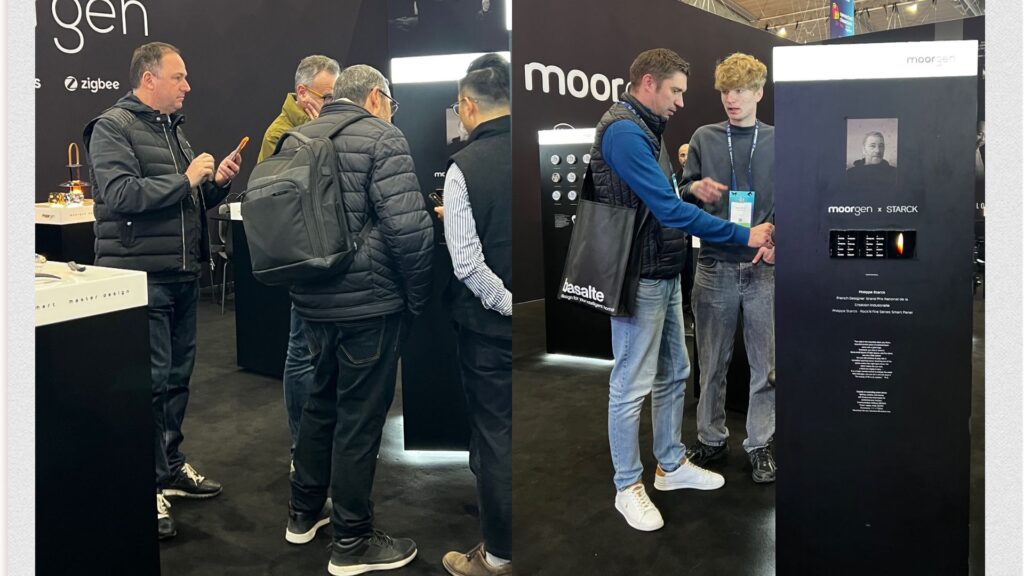
Three names dominate the high-end conversation in the UAE: the established giant KNX, the rising all-in-one star Moorgen, and the popular wireless standard Zigbee. Let’s break down which protocol is the ultimate fit for your Dubai villa.


The Contenders: A Quick Overview


FeatureKNX (Wired Standard)Moorgen (All-in-One System)Zigbee (Wireless Mesh)
Core PrincipleOpen, wired protocol. A “backbone” for devices from 500+ brands.Proprietary, closed ecosystem of sleek, all-in-one devices.Open, wireless mesh protocol used by many consumer brands.
InstallationMust be wired during construction/renovation. Requires certified professionals.Uses existing power lines (Power over Ethernet optional). Easier retrofit.Completely wireless, easy DIY or pro install.
Key StrengthUnmatched reliability, scalability, and long-term property value.Stunning design, intuitive control, and simplified high-end experience.Flexibility, lower upfront cost, and vast product selection.
Key ConsiderationHighest upfront cost and complexity. Requires careful planning.Vendor lock-in; you rely solely on Moorgen for devices and updates.Less robust for mission-critical systems; potential for interference.

Deep Dive: Performance in the Dubai Context

1. KNX: The Institutional Standard for Legacy Estates

Think of KNX as the industrial-grade, wired foundation of the world’s most ambitious smart buildings. For a large Dubai villa, it’s the benchmark of permanent integration.

  • Why it’s a Top Choice for Luxury:

    • Rock-Solid Reliability: A dedicated wired bus (separate from power lines) is immune to Wi-Fi congestion and Dubai’s RF interference. Your lighting, security, and climate control simply work.

    • Future-Proof & Scalable: Want to add motorized curtains, pool control, or full-home audio in Phase 2? With KNX, it’s a seamless integration. The system is brand-agnostic.

    • Increases Property Value: KNX is a recognized premium feature in real estate listings, signaling a permanently upgraded, professionally installed asset.

  • The Dubai Reality Check:

    • Must be planned early, ideally during the villa’s construction or a major renovation. Retrofitting can be invasive and costly.

    • Requires a certified KNX partner in Dubai for design, installation, and crucial long-term system updates and maintenance.

2. Moorgen: The “Luxury Experience” Turnkey Solution

Moorgen has disrupted the market by packaging high-end automation into stunning, minimalist hardware. It’s designed for the client who wants a sophisticated, finished look without managing multiple brands.

  • Why it’s a Top Choice for Luxury:

    • Design-Led & Cohesive: The touch panels and switches are architectural elements. The user experience is consistently polished across all controls.

    • Simplified High-End Functionality: It offers robust scene control, lighting, shading, and AV integration out of one box, simplifying the decision-making process.

    • Easier Retrofit: Uses Power Line Communication (PLC) over existing wires, making it more viable for villas not built with smart wiring in mind.

  • The Dubai Reality Check:

    • Complete Vendor Lock-In: You can only use Moorgen devices and panels. Your system’s future is tied to one company’s roadmap and their presence in the UAE.

    • Can be a “Walled Garden”: While it does some things excellently, deep, custom integrations with third-party high-end security or niche systems may be limited compared to KNX.

3. Zigbee: The Flexible Wireless Contender

Zigbee is the powerful wireless protocol behind systems like Philips Hue and many Samsung SmartThings devices. It creates a mesh network where devices relay signals to each other.

  • Why it’s a Consideration for Luxury:

    • Retrofit Paradise: Perfect for adding smart lighting, sensors, and plugs to an existing villa with zero new wiring.

    • Massive Product Ecosystem: Thousands of compatible devices from locks to leak sensors allow for highly customized solutions.

    • Cost-Effective Expansion: Adding a new sensor or bulb is often plug-and-play.

  • The Dubai Reality Check:

    • Not for Mission-Critical Systems: For the core functions of a luxury villa—whole-home lighting, gate control, alarm systems—professionals rarely recommend relying solely on a wireless mesh. Network stability can be affected by villa layout and construction materials.

    • Requires Expert Hub Management: A robust setup needs a powerful central hub (like Hubitat or Home Assistant) and expert configuration to ensure reliability, which negates much of the DIY cost saving.


The Verdict: Which One is Best for Your Dubai Villa?

The “best” protocol depends entirely on your villa’s stage, your priorities, and your vision for the home.

  • Choose KNX if: You are building a new villa or undertaking a major renovation, and your top priorities are absolute reliability, scalability for the next 20+ years, and increasing the core value of your property. You are making a long-term investment in the home’s infrastructure.

  • Choose Moorgen if: You want a high-end, designer “out-of-the-box” experience for a villa that is already built. You value stunning, cohesive hardware and a simplified user interface over brand-agnostic flexibility, and you trust a single provider for your ecosystem.

  • Choose Zigbee (as a supplement) if: You are looking to enhance an existing system (like KNX or Moorgen) with flexible, wireless sensors and niche devices, or you are pursuing a highly customized solution managed by a specialist integrator who can tame its complexity.

For most large, luxury Dubai villas, the industry’s gold-standard combination is a KNX wired backbone for all critical systems (lighting, HVAC, security), supplemented by Zigbee or Wi-Fi for flexible, add-on convenience devices.

Smart Home Maintenance in Dubai: Beat the Heat & Protect Your System

Your smart home is more than a luxury—it’s a significant investment in comfort, efficiency, and property value. But in the UAE’s harsh climate, where extreme heat, dust, and humidity are the norm, that investment requires proactive care to remain reliable and effective for the long term.

Without a smart home maintenance UAE strategy, even the most advanced system can degrade, leading to costly failures, security vulnerabilities, and diminished savings. Here’s your essential guide to ensuring long-term smart home reliability and protecting your investment against the Dubai heat.

1. Climate is Your #1 Adversary: Heat & Dust-Proofing

The desert environment is the ultimate stress test for electronics.

  • Thermal Management: Ensure all smart hubs, network switches, and controller panels are located in cool, ventilated areas—never in direct sunlight or in uninsulated attics/roof spaces where temperatures can become extreme.

  • Dust Defense: Seal wall-mounted sensors and controllers where possible, and schedule quarterly inspections to gently clean vents and screens with compressed air. Dust buildup is a primary cause of overheating and sensor malfunction.

2. The Critical Rhythm of Proactive Updates & Patches

A smart home is a living digital ecosystem. Stagnation equals vulnerability.

  • Firmware is Key: Regularly update the firmware of all devices—from smart thermostats and door locks to cameras and speakers. Manufacturers often release updates that improve heat tolerance, security, and performance.

  • KNX System Updates: For high-end, wired systems like KNX, this is non-negotiable. KNX system updates are not just about new features; they ensure compatibility with newer devices, patch security loopholes, and optimize system stability. This work should be performed by a certified KNX partner in Dubai who can also back up your project configuration before and after updates.

  • App & Platform Updates: Keep your central smart home apps (like Control4, Savant, or even vendor-specific apps) updated to maintain smooth integration and control.

3. The Network: Your Smart Home’s Unseen Backbone

If your Wi-Fi fails, your smart home becomes “dumb.”

  • Router Maintenance: Reboot your main router and mesh nodes monthly to clear memory and prevent slowdowns. Ensure they are kept cool.

  • Wired Reliability: For long-term smart home reliability, prioritize wired connections (Ethernet backhaul, KNX, or structured cabling) for critical devices like security systems and main controllers. Wired systems are inherently more resilient to heat and interference than wireless-only networks.

4. Battery-Powered Devices: A Scheduled Ritual

The heat accelerates battery depletion.

  • Create a Schedule: Every six months, check and replace batteries in all wireless sensors (door/window, motion, leak detectors), smart locks, and remotes. A failing battery can cause a device to go offline or send false alerts, compromising your entire security or automation scene.

5. Professional Health Checks: Don’t Go It Alone

DIY has its limits. An annual professional audit is the best insurance.

  • System Diagnostics: A certified technician can run deep diagnostics on your system, checking for communication errors, voltage drops in wired systems, and component wear.

  • Integration Review: They can verify that all integrations (AC, irrigation, audio, security) are functioning optimally and that your automation scenes (like your “Goodnight” or “Geofence Arrival” scenes) are triggering correctly.

  • Vendor Relationships: For complex systems like KNX, Crestron, or Control4, maintain a service contract with your installer. They have the specialized tools and software for KNX system updates and deep-level troubleshooting.

6. Document Everything: Your Maintenance Log

Keep a dedicated digital folder or log for:

  • All device model numbers and serial numbers.

  • Dates of installations, updates, and battery changes.

  • Login credentials and network maps (stored securely).

  • Contact information for your installers and vendors.
    This log is invaluable for troubleshooting and for future owners, adding to your property’s value.

Conclusion: An Investment That Lasts

Smart home maintenance UAE is not about fixing problems; it’s about preventing them. In Dubai’s demanding environment, a disciplined maintenance routine is what separates a fleeting gadget-filled house from a truly future-proofed, intelligent home that delivers comfort, security, and savings for a decade or more.

By embracing these tips especially the discipline of professional KNX system updates and climate aware care you secure the long-term smart home reliability that protects your investment and ensures it continues to work for you, not against you.

Protect your smart home. It’s the brain of your modern villa keep it sharp, cool, and running smoothly.

Smart Office ROI: How Building Automation Systems Reduce Operational Costs in DIFC Towers

Double your Office ROI with Smart Home Automation

In the heart of Dubai’s financial district, DIFC towers are monuments to global commerce, prestige, and ambition. But behind the gleaming glass facades lies a relentless operational challenge: managing astronomical energy consumption, ensuring optimal tenant comfort, and controlling spiraling overheads all while maintaining a competitive edge.

The solution transforming these iconic towers isn’t just a minor upgrade; it’s a strategic overhaul through Building Automation Systems (BAS/BMS). For landlords, facility managers, and tenants alike, a smart BMS is no longer a luxury it’s a powerful engine for financial return on investment (ROI). Here’s how.

The High-Stakes Equation of DIFC Operations

Before the solution, understand the core cost centers:

  • HVAC Dominance: Cooling can constitute ~40-50% of a building’s total energy use in Dubai.

  • Peak Demand Charges: DEWA tariffs punish high, short-term power draws.

  • Tenant Turnover & Churn: Inefficient environments impact tenant satisfaction and retention.

  • Manual Inefficiency: Reactive maintenance and manual system checks are labor-intensive and imprecise.

A building management system acts as the central nervous system for the tower, integrating and intelligently controlling HVAC, lighting, security, and power. The ROI is multi-faceted.


1. Energy Optimization: The Direct Financial Slash

This is the most quantifiable and significant area of ROI.

  • Predictive & Adaptive HVAC: Instead of cooling at a fixed schedule, a BMS uses data from thousands of sensors (indoor/outdoor temperature, occupancy, humidity) to deliver cooling precisely where and when it’s needed. It can pre-cool buildings using off-peak night air or adjust setpoints based on real-time occupancy from access control systems.

  • Peak Load Shaving & Scheduling: The system identifies periods of potential peak demand and strategically staggers the start-up of large equipment (chillers, AHUs) or briefly adjusts temperature setpoints by a degree to avoid costly demand spikes.

  • Lighting Intelligence: Automated, occupancy-based lighting in common areas, parking garages, and even tenant floors (with permission) eliminates waste. Integration with daylight harvesting sensors maximizes free natural light.

ROI Impact: DIFC buildings with advanced BMS routinely report 20-35% reductions in annual energy consumption. For a tower with an annual DEWA bill in the millions, this translates to savings that can pay for the system itself in 2-4 years.

2. Operational Efficiency: Doing More with Less

  • Proactive Maintenance: The BMS transitions from reactive to predictive. It monitors equipment performance (chiller efficiency, pump vibrations, filter pressure drops) and flags issues before they cause failure. This prevents catastrophic downtime, extends asset lifespan by years, and reduces emergency repair premiums.

  • Centralized Command & Control: Facility managers can monitor and control the entire building’s systems from a single dashboard or even a smartphone. This reduces the need for manual patrols and checks, optimizing staff time and allowing a smaller team to manage more effectively.

  • Data-Driven Decision Making: Instead of guessing, managers use hard data on energy use patterns, tenant occupancy trends, and equipment cycles to make informed capital planning and retrofit decisions.

ROI Impact: Significant reductions in maintenance costs (up to 15-25%), extended capital equipment life, and optimized labor allocation.

3. Tenant Experience & Retention: The Value of “Smart”

In the competitive DIFC leasing market, tenant retention is paramount to stable revenue.

  • Personalized Comfort Zones: Advanced systems allow tenants individual control over their suite’s temperature within an efficient bandwidth, increasing satisfaction.

  • Improved IAQ & Wellbeing: BMS constantly monitors and adjusts air quality (CO2, VOCs), a major factor in occupant health and productivity a key differentiator for top-tier companies.

  • Reliability: Consistent, comfortable environments with fewer hot/cold complaints and system failures directly reduce churn.

ROI Impact: Higher tenant retention rates, increased property valuation, and the ability to command premium rents as a “Grade A+ Smart Building.”

4. Sustainability & Regulatory Compliance: Future-Proofing Assets

DIFC and Dubai have ambitious sustainability goals (Dubai Clean Energy Strategy 2050, DIFC’s own ESG agenda). A BMS provides the auditable data and control needed to:

  • Achieve Green Certifications: Easily comply with and excel in benchmarks like LEED or BREEAM, which are increasingly demanded by global corporate tenants.

  • Meet Evolving Regulations: Stay ahead of mandatory energy performance reporting and efficiency standards.

  • Enhance Corporate Reputation: Tenants can report lower Scope 3 emissions from their leased space, aiding their own ESG reporting.

ROI Impact: Mitigates regulatory risk, avoids future retrofit penalties, and attracts ESG-conscious tenants at a premium.


The Bottom Line: Calculating Your BMS ROI

A modern BMS implementation in a DIFC tower is a capital expenditure with a clear, accelerated payback period.

Typical ROI Calculation Factors:

  • Capital Cost: Hardware, software, and installation.

  • Annual Savings: Direct energy cost reduction (the largest component).

  • Avoided Costs: Reduced maintenance, extended equipment life, and lower staff overtime.

  • Value-Add Revenue: Higher occupancy rates, premium rental yields, and increased asset value.

The Real-World Verdict: While the payback period varies based on the building’s age and system scope, modernizations typically see a full ROI within 3 to 5 years. For new builds, integrating a BMS from the design phase is even more cost-effective and delivers savings from day one.